
First-Time Cruise Guide 2026: 30 Things to Know Before You Sail

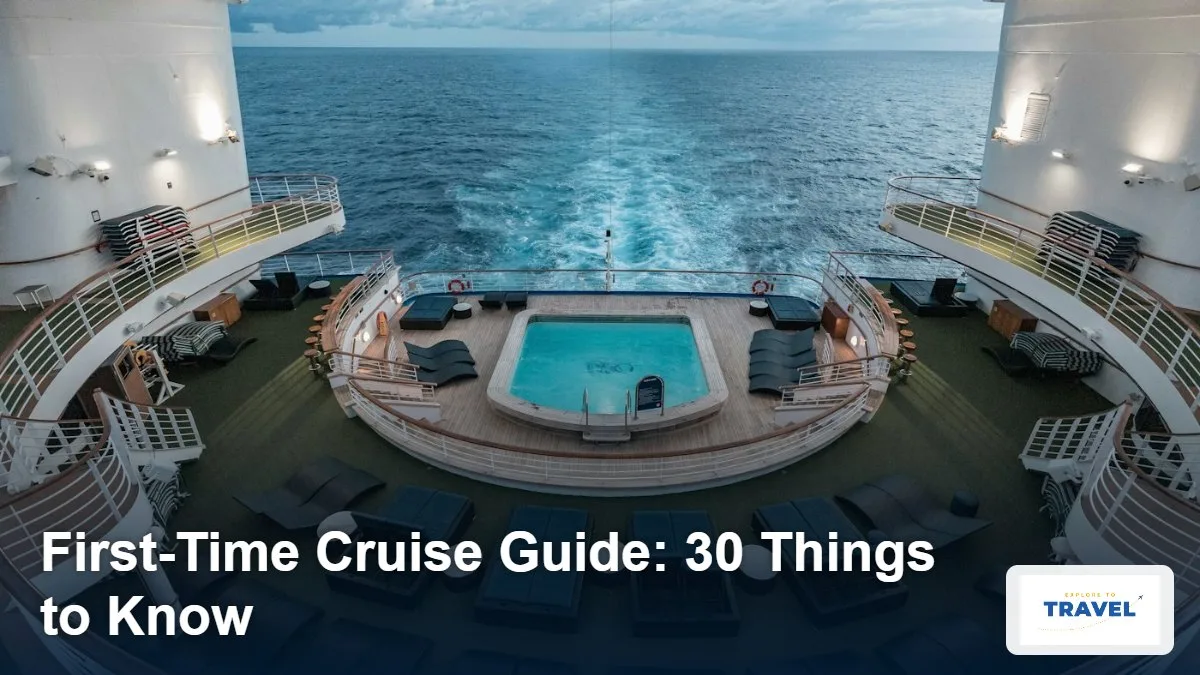
Taking your first cruise is exciting, but it can also feel confusing. Which cruise line should you choose? Is an inside cabin too small? What is included, and what costs extra? What happens on embarkation day? This first-time cruise guide answers all of those questions in plain language, so you can book with confidence and enjoy every minute on board.
We have organised the guide in the same order you will plan your trip: choosing the cruise, booking, preparing, boarding, life on board, days in port and the final morning. Bookmark it and come back as you go.
Table of Contents
- How a cruise holiday works
- Step 1: Choose the right cruise
- Step 2: Book smart
- Step 3: Prepare before you sail
- Step 4: Embarkation day
- Step 5: Life on board
- Step 6: Port days
- Step 7: The last day
- 12 first-timer mistakes to avoid
- FAQ
How a Cruise Holiday Works
A cruise is a floating hotel that moves while you sleep. You unpack once, and most mornings you wake up in a new port. Your fare normally includes your cabin, meals in the main dining room and buffet, basic drinks such as water, tea and coffee, most entertainment, pools and the gym. You pay extra for things like alcohol and soft drinks, specialty restaurants, Wi-Fi, spa treatments, shore excursions and daily service charges.
Some days are “sea days”, when the ship sails between ports and you enjoy the facilities on board. Other days are “port days”, when the ship docks or anchors and you can go ashore, usually from morning until late afternoon. You must be back on board by the “all aboard” time, which is normally 30 to 60 minutes before departure.
According to the cruise industry association CLIA, tens of millions of people take a cruise every year, and a large share of them are first-timers. In other words, you will be in good company.
Step 1: Choose the Right Cruise
1. Start with a short cruise
If you are not sure whether you will love cruising, try a three- to five-night trip first. It costs less, and you will quickly learn what you like. Short Red Sea cruises from Jeddah, mini-cruises from Singapore, or Bahamas cruises from Miami are popular starters. If you live in the Gulf, see our update on cruises from Dubai for this season’s best options.
2. Pick a region that matches your season
Each cruise region has a best time of year:
- Caribbean: December to April for dry, sunny weather.
- Mediterranean: May to October for beaches and warm evenings.
- Northern Europe and Norway: June to August for long days.
- Alaska: May to September.
- Southeast Asia: November to April.
- Australia and New Zealand: November to March.
Our Mediterranean cruise guide explains Europe’s main routes in detail.
3. Choose a cruise line that fits your style
Cruise lines are very different from each other. Here is a quick overview:
- Big, fun and family-focused: Royal Caribbean, MSC Cruises, Carnival and Norwegian. Huge ships, water slides, Broadway-style shows and lots of restaurants.
- Premium and relaxed: Celebrity, Princess, Holland America and Cunard. Calmer atmosphere, better food, more space.
- Adults only: Virgin Voyages, which is aimed at adults 18 and over.
- Luxury and all-inclusive: Regent Seven Seas, Silversea, Seabourn and Explora Journeys. Smaller ships, suites and drinks often included.
- Regional and culturally tailored: AROYA Cruises in the Red Sea, with halal dining and Arabian hospitality.
The two biggest brands for value are compared side by side in our Royal Caribbean vs MSC guide.
4. Think about ship size
Mega-ships carrying 5,000 to 7,000 guests have the most facilities, but they can feel busy and boarding can take longer. Mid-size ships (2,000 to 3,000 guests) are easier to navigate. Small ships visit smaller ports and feel more personal, but have fewer activities. For first-timers with children, a big ship is usually the most fun. For couples who want calm, a mid-size premium ship often wins.
5. Look at the itinerary, not just the price
Check how many sea days there are, how long you stay in each port, and whether the ship docks at the pier or uses small boats (tenders) to take you ashore. A cheap cruise with very short port stops may be less enjoyable than a slightly more expensive one with long days in great cities.
Step 2: Book Smart
6. Choose your cabin type carefully
Cabins come in four main types: inside (no window), oceanview (window), balcony and suite. Inside cabins are the cheapest and darkest, which helps you sleep. Balconies add fresh air and private views. Our full cruise cabin types guide explains which one is best for your budget.
7. Pick a cabin location that avoids noise and motion
If you worry about seasickness, choose a cabin on a lower or middle deck, close to the middle of the ship. Avoid cabins directly under the pool deck, nightclub or theatre, or above the main lobby, which can be noisy. Look at the deck plan before you confirm.
8. Understand the full price
The headline fare often excludes taxes, port fees and daily service charges. On many big lines, automatic gratuities are charged per person, per day. For example, Royal Caribbean’s standard rate is currently around US$18.50 per person per day for regular cabins. Read our guide to hidden cruise costs so you are not surprised by your final bill.
9. Book at the right time
Booking 9 to 12 months ahead gives you the best choice of cabins and often the best promotions. Last-minute deals exist, but you have less choice and flights may be expensive. See our tips on how to find cheap cruise deals.
10. Get travel insurance straight away
Buy insurance as soon as you pay your deposit. Make sure it covers cruise cancellation, missed departure, medical treatment on board and medical evacuation, which can be very expensive at sea.
Step 3: Prepare Before You Sail
11. Check your passport and visas
Most cruise lines require a passport valid for at least six months after your cruise ends. Check visa rules for every country the ship visits, not just the departure port. Some ports require visas even for a single day ashore.
12. Complete online check-in
About one to two months before sailing, the cruise line will ask you to check in online. You will upload your passport, a photo and a payment card for your onboard account, choose an arrival time, and download your boarding pass. Doing this early saves time at the terminal.
13. Download the cruise line’s app
Most lines have an app that shows daily schedules, restaurant menus and your onboard spending. Many apps also let you book shows and dining, and some work on the ship’s network without buying Wi-Fi.
14. Book key extras early
Popular shows, specialty restaurants, spa treatments and shore excursions can sell out. If something matters to you, book it in advance, often at a lower price than on board.
15. Pack smart
You need less than you think. Pack casual daywear, swimwear, comfortable walking shoes, one or two smarter outfits for dinner, a light jacket for windy decks and any medicines in your hand luggage. Our printable cruise packing list covers everything, including what you are not allowed to bring.
16. Arrive in the port city a day early
This is the single best tip for first-timers. If your flight is delayed and you miss the ship, it will leave without you. Arriving the day before removes that risk and gives you a mini city break. Compare hotels near the port on our Explore To Travel search.
Step 4: Embarkation Day
17. Arrive at your chosen check-in time
Terminals assign arrival windows to avoid queues. Bring your passport, boarding pass and any visa documents. You will drop your big suitcases with porters outside; they will be delivered to your cabin later in the day, sometimes not until early evening.
18. Keep a day bag with essentials
Because your luggage arrives later, carry a small bag with medicines, swimwear, sunscreen, chargers, valuables and a change of clothes.
19. Go through security and get your cruise card
Security is similar to an airport. You will then get (or activate) your cruise card or wearable. This is your room key, ID and payment method on board. Everything you buy is charged to this account and paid at the end of the cruise.
20. Attend the safety drill
Every cruise has a mandatory safety briefing, often called the muster drill. On many lines you watch a video on the app or your cabin TV, then check in at your assembly station. It only takes a few minutes, and it is required by international maritime law.
21. Explore on the first afternoon
The first afternoon is a great time to walk the ship, find the pools and restaurants, book spa appointments and enjoy the sail-away party on deck.
Step 5: Life on Board
22. Understand dining
The main dining room serves multi-course dinners, either at a fixed time with the same table each night or “my time” dining when you choose. The buffet is open for breakfast, lunch and often dinner. Specialty restaurants (steakhouses, sushi, Italian) cost extra. If you have dietary needs, such as halal, vegetarian, gluten-free or allergies, tell the cruise line when you book and speak to the restaurant manager on the first day.
23. Read the daily schedule
Every evening, the next day’s programme appears in the app or as a printed newsletter. It lists shows, trivia, dance classes, fitness sessions, port information and dress codes.
24. Know the dress code
Daytime is casual. Most evenings are “smart casual”. Many ships have one or two optional “formal” or “dress-up” nights per week, when guests wear suits, dresses or traditional formal clothes. Nobody will turn you away from the buffet in casual clothes.
25. Manage your spending
It is easy to overspend because you never see cash. Check your account in the app every day. If you drink a lot of coffee, soft drinks or alcohol, compare the cost of a drinks package against paying per drink.
26. Stay healthy
Wash your hands often, especially before meals, and use the hand-sanitiser stations. The US CDC Vessel Sanitation Program inspects many ships and publishes their scores. If you are prone to motion sickness, bring tablets or bands, eat light meals and spend time on deck looking at the horizon.
Step 6: Port Days
27. Decide between ship tours and independent trips
Ship excursions are easy and the ship will wait if the tour is late. Independent tours are often cheaper and smaller, but if you are late, the ship can leave without you. For long-distance trips (for example, from a port to a far-away capital city), first-timers often feel safer on the ship’s tour. For walkable ports, explore on your own.
28. Always know the all-aboard time
Write down the all-aboard time and the ship’s port agent phone number before going ashore. Set phone alarms. Remember that the ship runs on “ship time”, which may differ from local time.
29. Carry the essentials ashore
Bring your cruise card, a photo ID (some ports require your passport), local currency or a card, water, sunscreen and a charged phone. Leave large amounts of cash and valuables in your cabin safe.
Step 7: The Last Day
30. Prepare for disembarkation
On the last night, you will usually leave your large bags outside your cabin before bed, so they can be taken off the ship. Keep a small bag with clothes, documents and medicines for the morning. Review your final bill on the app. If you can carry all your luggage, “self-assist” disembarkation lets you leave first. Book flights home for the early afternoon or later to allow time.
A Sample First-Cruise Budget Checklist
Use this list to estimate your real cost before booking:
| Cost | Included? | Notes |
|---|---|---|
| Cruise fare | Yes | Cabin, main meals, most entertainment |
| Taxes and port fees | Sometimes | Check whether shown in the headline price |
| Service charges / gratuities | Usually not | Charged per person, per day |
| Drinks | Water, tea, coffee only | Packages or pay per drink |
| Wi-Fi | Usually not | Buy a package for the full trip |
| Shore excursions | No | Ship tours or independent |
| Specialty dining | No | Optional |
| Flights and pre-cruise hotel | No | Book early |
| Travel insurance | No | Essential |
Sea Day Ideas: How to Enjoy a Day at Sea
First-timers sometimes worry that sea days will be boring. In reality, many cruisers say they are their favourite days. Here are ideas to fill them:
- Sleep in and enjoy a slow breakfast in the main dining room or with room service on your balcony.
- Join a class: cooking demonstrations, dance lessons, photography workshops or language sessions.
- Try the big attractions such as water slides, surf simulators or rock-climbing walls, which are less busy early in the morning.
- Book the spa or a thermal suite pass.
- Play trivia, bingo or board games with new friends.
- Watch a matinee show or film by the pool.
- Take a behind-the-scenes tour, where available, to see the galley or bridge.
- Read on deck and watch for dolphins and flying fish.
Cruising with Children, Seniors or Mobility Needs
With children
Big ships have free kids’ clubs split by age, usually from three years old, with paid babysitting or nursery options for younger children on some lines. Register your children on the first day, pack swim nappies for toddlers (normal nappies aren’t allowed in pools) and check the minimum age for infants, which is usually six months, or twelve months for some longer voyages.
With older relatives
Cruising is excellent for grandparents: no repeated packing, lifts everywhere and medical care on board. Choose a cabin close to the lifts, book ship tours rated “easy”, and consider a ship that docks rather than tenders in most ports.
With mobility needs
Accessible cabins are limited, so book early and complete the cruise line’s special-needs form. Ask about wheelchair access at each port, especially tender ports, where you may not be able to go ashore in rough seas.
Cruise Etiquette: Unwritten Rules
- Don’t reserve pool loungers with towels and then disappear for hours.
- Let people exit lifts before you enter, and use the stairs for one or two decks.
- Wash your hands before entering the buffet, and use the serving tongs.
- Keep balcony noise down, especially late at night and early in the morning.
- Be on time for tours and tenders; everyone waits if you are late.
- Respect dress codes in the main dining room.
- Treat the crew kindly; they work long hours far from home.
12 First-Timer Mistakes to Avoid
- Flying in on the same day as the cruise.
- Forgetting to check passport validity and port visa rules.
- Packing medicines in checked luggage.
- Ignoring daily service charges when comparing prices.
- Buying an expensive drinks package you will not use.
- Not booking popular shows and restaurants in advance.
- Choosing a cabin under the nightclub or pool deck.
- Missing the all-aboard time in port.
- Using mobile data at sea without a plan, which can be extremely expensive.
- Overpacking formal clothes you never wear.
- Skipping travel insurance.
- Trying to do everything. It’s a holiday, so leave time to relax.
Is Cruising Right for You?
Cruising is perfect if you want to see several places without repacking, love good food and entertainment, and like having everything organised. It is great for multi-generation families, couples and friends who want different activities but shared dinners. It may not suit you if you want to spend many days in one city, hate crowds, or prefer completely unplanned travel. A short first cruise is the easiest way to find out.
Frequently Asked Questions
How early should I book my first cruise?
Around 9 to 12 months ahead is ideal for the best cabin choice and early-booking offers, especially for school holidays.
Is food really free on a cruise?
Meals in the main dining room and buffet are included. Specialty restaurants, most drinks and some room-service items cost extra.
Will I get seasick?
Most people feel fine on large modern ships, which have stabilisers. Choose a mid-ship, lower-deck cabin and bring remedies just in case.
Can I use my phone on a cruise?
Yes, but use the ship’s Wi-Fi package or turn off mobile data at sea. Maritime roaming charges can be very high.
What happens if I miss the ship in port?
You will need to travel to the next port at your own cost. That is why it is important to return on time, or book the ship’s own excursions for longer trips.
Do I need cash on a cruise?
Not on board, since everything is charged to your cruise account. Bring some local cash or a travel card for ports.
Ready to start? Tell us where and when you’d like to sail on our Cruises page, and we’ll help you compare the best fares.
Last updated: November 2026. Prices, policies and charges can change; always confirm with your cruise line. See our affiliate disclosure.