Cruise Cabin Types Explained: Inside vs Oceanview vs Balcony vs Suite (2026 Guide)

Choosing a cabin is one of the biggest decisions you will make when booking a cruise. It affects your budget, how well you sleep, how much daylight you see and even how you feel if the sea gets rough. Yet many travellers simply pick the cheapest option, or the most expensive one they can afford, without understanding the real differences.
This guide explains every main cruise cabin type, compares sizes and prices, and shares the location tips that experienced cruisers use. By the end, you will know exactly which cabin is right for your trip.
Table of Contents
- Cruise cabin types at a glance
- Inside cabins
- Oceanview cabins
- Balcony cabins
- Suites and ship-within-a-ship areas
- Special cabin types
- How to choose the best cabin location
- Guarantee cabins: are they worth it?
- Which cabin is best for you?
- FAQ
Cruise Cabin Types at a Glance
| Cabin type | Typical size | Natural light | Relative price | Best for |
|---|---|---|---|---|
| Inside (interior) | 11–16 m² (120–170 sq ft) | None | Lowest | Budget travellers, deep sleepers, port-heavy trips |
| Oceanview | 12–18 m² (130–190 sq ft) | Window or porthole | Low–medium | Those who want daylight on a budget |
| Balcony (veranda) | 15–22 m² incl. balcony | Full glass door + private outdoor space | Medium–high | Scenic routes, warm climates, couples |
| Suite | 25 m² to 100+ m² | Large windows + big balcony | Highest | Luxury, families needing space, special occasions |
Sizes vary a lot between cruise lines and even between ships of the same line, so always check the exact size on the cruise line’s deck plan before booking.
Inside Cabins
An inside cabin, also called an interior stateroom, has no window. It usually includes a bed that can be two twins or one queen, a small sofa or chair, a desk, a TV, a wardrobe and a private bathroom with a shower.
Pros of inside cabins
- Cheapest way to cruise. Inside cabins are often much cheaper than balconies on the same sailing, leaving more money for excursions and drinks.
- Perfect for sleeping. With no window, the room is completely dark when the lights are off. Many people sleep better than at home.
- Often in stable locations. Many inside cabins sit in the middle of the ship, where you feel less motion.
Cons of inside cabins
- No daylight, so it is hard to tell if it is morning.
- Can feel small and closed-in, especially for three or four people.
- No private outdoor space for sea views.
Tip: Some ships have “virtual balcony” inside cabins with a floor-to-ceiling screen showing a live view from outside, or “promenade view” inside cabins with a window overlooking the indoor shopping street. These are a nice middle ground.
Choose an inside cabin if: you plan to spend most of your time around the ship or ashore, you are on a port-intensive itinerary such as the Mediterranean, or you want to save money. It is a great choice for a first cruise to test whether you like cruising.
Oceanview Cabins
Oceanview (or outside) cabins have a window or a round porthole. The window does not open. The layout is similar to an inside cabin, sometimes with a little more space or a sofa bed.
Pros of oceanview cabins
- Natural light and a view of the sea and ports.
- Usually only a little more expensive than inside cabins.
- Good on cold-weather cruises (Norway, Alaska, Northern Europe) where you would not use a balcony much.
Cons of oceanview cabins
- No fresh air or outdoor space.
- Some windows have an “obstructed view”, usually blocked by lifeboats. These are cheaper but can be disappointing.
- Often located on lower decks, which is great for stability but further from the pool deck.
Choose an oceanview cabin if: you want daylight without paying balcony prices, or you are sailing somewhere cool.
Balcony Cabins
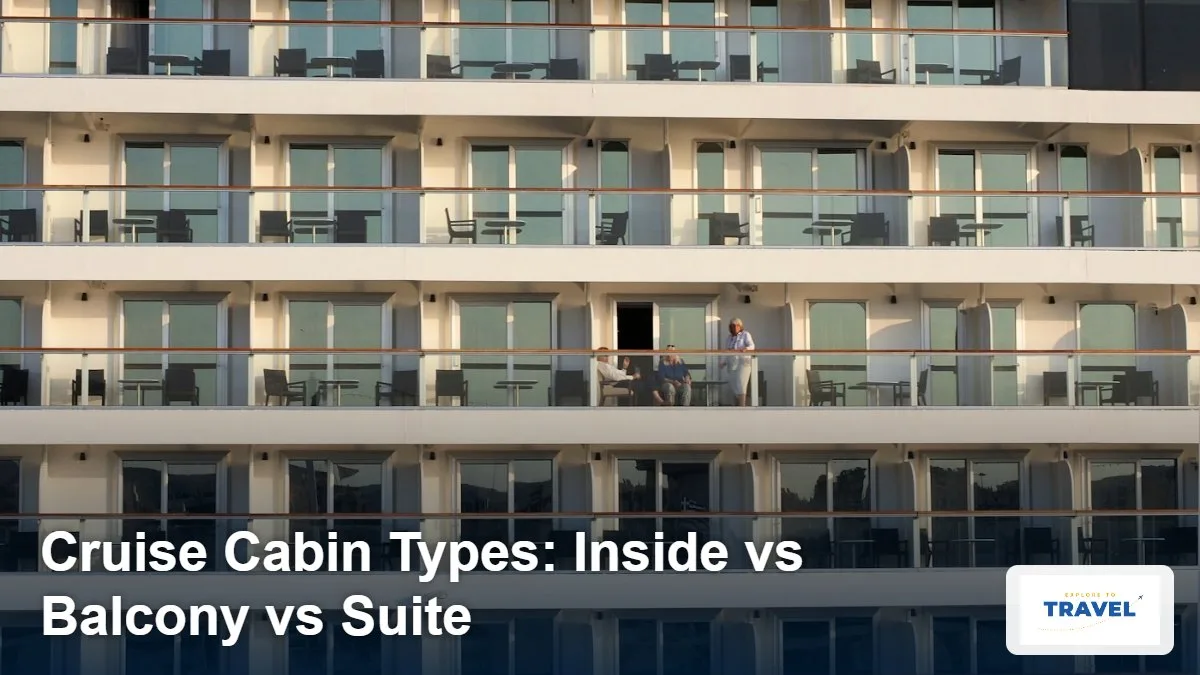
A balcony cabin, also called a veranda stateroom, has a glass sliding door leading to a private balcony with chairs and a small table. Inside, the room is usually a bit larger than an inside cabin, with a sitting area.
Pros of balcony cabins
- Your own private outdoor space. Drink your morning coffee in peace, watch sunsets and see the ship arrive in port.
- Fresh air. Open the door to hear the sea. Many people find this helps with seasickness.
- More space. The balcony makes the cabin feel much bigger.
- Great for scenic routes. Norwegian fjords, Alaska glaciers, Greek islands, the Nile and Halong Bay are all much better with a balcony.
Cons of balcony cabins
- Significantly more expensive than inside or oceanview cabins.
- Balcony sizes vary; some are just big enough for two chairs.
- Some balconies are partly shaded or overlooked by decks above.
- Less useful in cold or very windy weather.
Types of balconies to know:
- Standard balcony: The normal option.
- Extended or large balcony: Bigger outdoor area, often at the corners or back of the ship.
- Aft (rear) balcony: Wake views and often bigger balconies, but you may feel more vibration.
- Hump balcony: Sticks out from the side of some ships, giving forward or rear views.
- Interior-facing balcony: On Royal Caribbean’s Oasis Class, some balconies face Central Park or the Boardwalk rather than the sea. Cheaper, but no ocean view and more noise.
Choose a balcony if: you are celebrating, sailing a scenic or warm route, travelling with someone who wakes earlier than you, or simply want a private place to relax.
Suites and Ship-Within-a-Ship Areas
Suites range from “junior suites”, which are basically large balcony cabins with a bathtub, to huge multi-room suites with private hot tubs and grand pianos. The biggest advantage is not just the room but the perks.
Common suite perks
- Priority check-in and boarding.
- Butler or concierge service.
- Access to private lounges, restaurants and sun decks.
- Included drinks, Wi-Fi or specialty dining on some lines.
- Better toiletries, robes and bigger bathrooms.
Ship-within-a-ship concepts
Several cruise lines have exclusive areas for suite guests:
- MSC Yacht Club: A private complex with its own pool, lounge with free drinks, restaurant and 24-hour butler service.
- Royal Caribbean’s Suite Neighborhood on Icon Class ships, and the Royal Suite Class on others.
- Norwegian Cruise Line’s The Haven.
- Celebrity’s The Retreat.
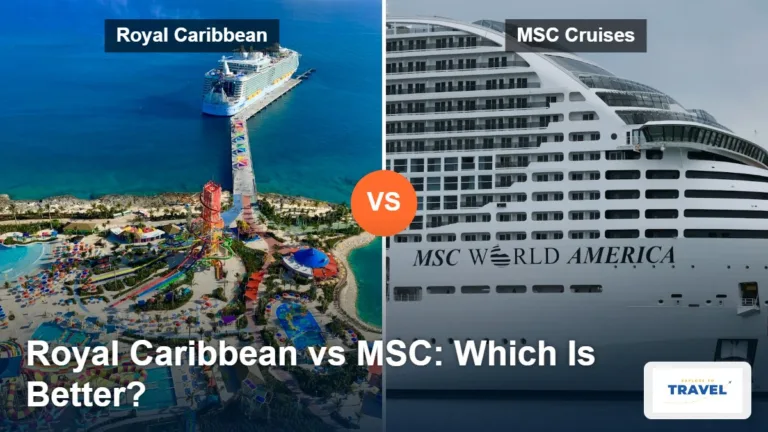
If you cannot decide between two big brands, our Royal Caribbean vs MSC comparison looks at their suite experiences in detail.
Choose a suite if: you want a luxury experience without switching to a small luxury cruise line, you hate queues, or you need space for a family.
Special Cabin Types
Family cabins
Many big ships have family staterooms that sleep four to six people, sometimes with two bathrooms or a separate kids’ area. Connecting cabins (two cabins with a door between them) are another good option for families with older children.
Solo cabins
Most cruise fares are based on two people sharing, and solo travellers usually pay a “single supplement”. Some lines, such as Norwegian, have studio cabins designed for solo travellers with access to a shared lounge.
Spa cabins
Located near the spa, often with perks like free thermal suite access and healthy room-service menus.
Accessible cabins
Designed for guests with mobility needs, with wider doors, roll-in showers and grab rails. They are limited, so book early and tell the cruise line about any needs.
How to Choose the Best Cabin Location
Where your cabin is on the ship matters almost as much as the type. Here’s how to pick a good spot.
For less motion: low and middle
The middle of the ship on a lower or middle deck moves the least in rough seas. Front (forward) cabins move the most, and high decks feel more sway. If you are prone to seasickness, choose a mid-ship cabin on a low deck, and pack remedies.
For less noise: check above and below
Look at the deck plan above and below your cabin. Avoid cabins directly under the pool deck (chairs scraping early morning), the buffet, the gym or the jogging track, and above or below nightclubs, theatres and bars. Cabins near lifts and stairwells are convenient but can be busy.
For views: aft or forward
Aft cabins have beautiful wake views and often bigger balconies. Forward cabins sometimes have unusual shapes and views ahead, but more motion.
For convenience: near lifts
If you have mobility issues or children, a cabin near (but not directly next to) a lift bank saves long walks on huge ships.
Watch out for
- Obstructed views: Lifeboats or structures blocking windows or balconies.
- Low decks near the anchor or engines: Can be noisy early in the morning when the ship docks.
- Connecting cabins: You may hear neighbours through the shared door.
Guarantee Cabins: Are They Worth It?
A “guarantee” cabin means you book a category (for example, “balcony”) but the cruise line chooses your exact cabin later. Guarantee fares are often cheaper, and sometimes you even get upgraded. The risk is that you might be given a less desirable spot, such as an obstructed balcony or a cabin under a noisy deck. If you are flexible and want to save money, a guarantee can be a good deal. If you have special needs or are prone to seasickness, choose your cabin yourself.
How Much More Does Each Cabin Type Cost?
Price differences change with every sailing, but a typical pattern on mainstream lines is:
- Oceanview costs a little more than inside.
- Balcony often costs noticeably more than inside on the same cruise, and the gap is bigger in peak season and on scenic routes.
- Suites can cost two to five times as much as an inside cabin, but may include drinks, Wi-Fi and dining.
When comparing, divide the price difference by the number of nights. Sometimes a balcony is only a small extra per day, which many travellers think is worth it. Also remember that daily service charges are often higher for suite guests. Our hidden cruise costs guide explains this.
Upgrades: How to Get a Better Cabin for Less
- Book early to get the best choice of cabins at the lowest price.
- Watch for price drops before final payment; some lines let you rebook at a lower price or upgrade.
- Bid for upgrades. Some cruise lines run upgrade auctions or “bid” programmes before sailing.
- Use loyalty perks. Repeat cruisers sometimes receive upgrade offers.
- Choose shoulder season. Balconies are cheaper in less popular months. Our cheap cruise deals guide lists the best times to book.
Which Cabin Is Best for You?
| Traveller | Our recommendation |
|---|---|
| Budget traveller | Inside cabin, mid-ship |
| First-time cruiser | Inside or oceanview on a short cruise |
| Couple on honeymoon | Balcony or junior suite |
| Family with small children | Family cabin, connecting cabins or balcony (with child-safe locks) |
| Prone to seasickness | Low-deck, mid-ship balcony or oceanview |
| Scenic route (fjords, Alaska, Greek islands) | Balcony |
| Port-heavy Mediterranean cruise | Inside or oceanview to save money |
| Luxury lover | Suite or ship-within-a-ship (e.g. MSC Yacht Club) |
What’s Inside a Typical Cruise Cabin?
Most mainstream cruise cabins, whatever the category, include:
- A bed that can be two singles or one double/queen
- A wardrobe with hangers, drawers and a safe
- A desk or vanity with a mirror and a hairdryer
- A TV with ship information, films and live channels
- A small fridge or mini-bar (contents usually cost extra)
- A phone for calling other cabins and guest services
- A private bathroom with shower, toilet and basin; suites may have a bathtub
- Power sockets, often both US and European types, plus USB ports on newer ships
- Daily housekeeping, often twice a day on some lines
Bathrooms
Standard cruise bathrooms are compact, with small showers and a vacuum toilet. Shampoo and soap are provided. Suites have larger bathrooms, sometimes with double sinks and whirlpool baths.
Cabin Differences by Cruise Line
- Royal Caribbean: Innovative options such as virtual balconies, Central Park balconies, loft suites and the multi-level Ultimate Family Suite on some ships.
- MSC Cruises: Clear “experience” levels that change perks, plus the MSC Yacht Club for suite guests.
- Norwegian: Studio cabins for solo travellers and The Haven suite complex.
- Celebrity: Edge Class “Infinite Verandas” where the balcony becomes part of the room at the touch of a button.
- Luxury lines: Almost all suites, usually with balconies, more space and butler service.
10 Clever Cabin Hacks
- Use magnetic hooks on the metal walls for hats, bags and lanyards.
- Bring an over-the-door organiser for toiletries and shoes.
- Pack a small night light, especially in inside cabins.
- Ask your steward for extra hangers, pillows or a mini-fridge refresh.
- Store suitcases under the bed to free up floor space.
- Use a non-surge USB charging hub for all your devices.
- Keep the “Do not disturb” sign handy for sleeping in after late nights.
- Ask about a bed configuration (twins or queen) before boarding.
- Close the balcony curtain on sunny afternoons to keep the cabin cool.
- Keep the safe code simple but private, and lock passports there.
Cabins for Seasickness, Explained Simply
Ships move in two main ways: pitching (front to back) and rolling (side to side). The middle of the ship and lower decks move least. A balcony or window helps because seeing the horizon tells your brain why you feel movement. If you are very sensitive, pick a ship with stabilisers (almost all modern ships), avoid long sea crossings in winter, and choose calmer regions like the Caribbean in spring or the Adriatic in summer.
How to Read a Cruise Deck Plan
Every cruise line publishes deck plans on its website. Look for the cabin number, which normally starts with the deck number (for example, 8254 is on deck 8). Check the symbols for sofa beds, connecting doors, accessible cabins and obstructed views. Then look at the decks above and below to spot noise risks. Independent sites such as CruiseDeckPlans and Cruise Critic show photos and reviews of specific cabins.
Cabin Choice by Cruise Region
- Caribbean and Bahamas: A balcony is lovely in the warm evenings, but you will spend most days on beaches; an inside cabin is a smart saver on short cruises.
- Mediterranean: Very port-intensive. Inside or oceanview cabins often make sense. See our Mediterranean cruise guide.
- Norwegian fjords and Alaska: A balcony is worth it for the scenery, even if it’s cool. Bring a warm layer.
- Red Sea and Arabian Gulf: Warm winters make balconies enjoyable; pick the shaded side if you can. Check this season’s options in our cruises from Dubai guide.
- Transatlantic and repositioning cruises: Many sea days, so a balcony or larger cabin makes the trip more comfortable.
- River cruises: Cabins are smaller; French balconies (a full-height window that opens) are common and good value.
Port Side or Starboard Side?
Port is the left side of the ship when facing forward, and starboard is the right. On some itineraries, one side gets better views, for example the coastline during a scenic sail-in, or more afternoon sun. In hot regions, the side facing away from the afternoon sun stays cooler. Check the route on a map before you choose. For most cruises, though, both sides see the same amount of scenery over the week.
Common Cabin Booking Mistakes
- Not checking what is above and below your cabin.
- Booking an “obstructed view” without realising it.
- Choosing a forward cabin when prone to seasickness.
- Paying for a balcony on a cold or port-heavy cruise you’ll barely use it on.
- Booking four people into a small inside cabin for a long cruise.
- Assuming all cabins in a category are the same size.
- Forgetting to request twin or double beds.
Frequently Asked Questions
Is an inside cabin on a cruise worth it?
Yes, for many travellers. It is the cheapest option, very dark for good sleep, and you will spend most of your time outside the cabin anyway.
Is a balcony cabin worth the extra money?
On scenic, warm-weather or longer cruises, most people say yes. On short, port-heavy or cold-weather cruises, you may not use it much.
Which cruise cabin is best for seasickness?
A mid-ship cabin on a lower deck, ideally with a window or balcony so you can see the horizon and get fresh air.
What is a guarantee cabin?
A guarantee fare lets the cruise line choose your exact cabin within a category. It is cheaper but you cannot pick your location.
Can four people share a cruise cabin?
Many cabins sleep three or four using sofa beds or pull-down bunks, but space is tight. Family cabins or two connecting cabins are more comfortable.
Do suites include drinks?
It depends on the cruise line and suite level. Some include drinks, Wi-Fi and dining; others only include priority services. Check the details before booking.
Ready to choose? Compare cabins and prices on our Cruises page, and pack the right things with our cruise packing list.
Last updated: November 2026. Cabin sizes, prices and perks vary by ship. See our affiliate disclosure.